Sustainability
Groot Recycling & Curbside Electronic & White Goods Waste Collection
Recycling Collection Program
Groot provides unlimited recycling services to each household and supplies a 65 or 35-gallon recycling cart for their use. The carts were paid for as part of a Village procured DCEO grant. Extra recycling items may be placed in an 18-gallon bin, a cardboard box or a clearly marked container which is labeled “Recycling Only”.
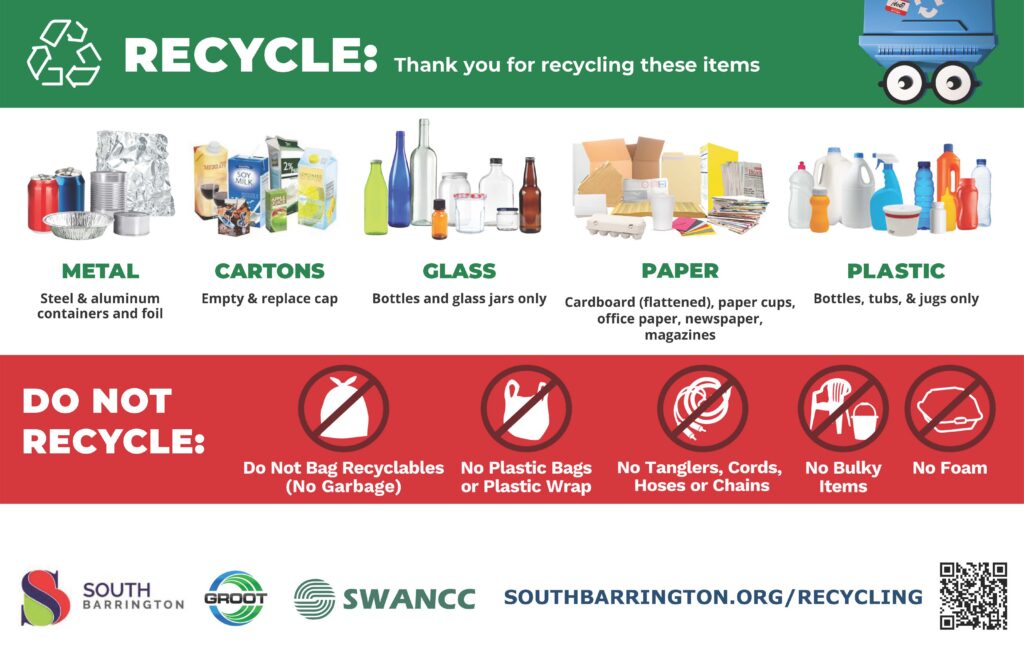
Acceptable Items:
Paper: Newspaper with inserts, magazines, catalogs (glossy & non-glossy), telephone directories, office/school paper, advertising and junk mail, Kraft brown paper bags, corrugated cardboard, paperboard and chipboard such as cereal, pasta, clothing, and tissue boxes.
Metal: Aluminum cans, steel, tin and bi-metal cans.
Glass: Brown, green and clear glass, bottle and jars, cleaned.
Aseptic Packaging: Juice boxes and milk cartons.
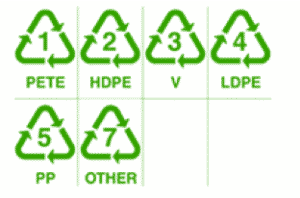
Plastic: Beverage and food containers, milk, water, juice bottle, liquid detergent, fabric softener, bleach, shampoo bottles, yogurt cups, vegetable oil bottles, etc. Recyclable plastic will contain the following symbols:
Unacceptable Items:
Do not put the following items in the recycle bins for recycling: wire hangers, mirrors, light bulbs, window glass, ceramics, soiled fibers (e.g. oily pizza boxes, paper napkins, etc.), batteries, plastic bags, Styrofoam, wood, plastic film, plastic toys, diapers, or electronics.
Recycling Preparation:
- Rinse all recyclables free of food residue.
- Leave caps on plastic containers.
- Materials may be mixed together.
- Paper may be placed in paper bags.
- Flatten all corrugated cardboard and paperboard boxes.
- Remove any non-paper packing material.
- Do not put recyclables in plastic bags such as kitchen or grocery bags.Plastic bags are not recyclable or accepted. Return plastic bags to your local grocery store for recycling.
Curbside Electronic & White Goods Waste Program
Curbside Electronic Waste Collection
Electronic waste items are collected at the curb at no additional cost to the residents. Residents are required to call Groot at 800-244-1977 by the Friday before the next scheduled collection day to schedule a pickup.
Electronic Waste Items Accepted Include: Cable receivers, cell phones, computer cables, monitors, desktops, laptops, notebooks, tablets, and converter boxes. Fax machines, keyboards, mice, MP3 Players, Portable Digital Assistants (PDAs), printers and multi-functional printers, satellite receivers, scanners, televisions (all types), video game consoles, video recorders and players, and zip drives.White Goods (Appliances) Collection.
White Goods (Appliances) Waste Collection
White Goods are collected at the curb at no additional cost to the residents. Residents are required to call Groot at 800-244-1977 to schedule a pickup.
White Goods (Appliance) Items Accepted Include: Refrigerators, freezers, ovens, washers, air conditioners, humidifiers, de-humidifiers, dryers, water heaters, water softeners, dishwashers, stoves, ranges, furnaces.
Unacceptable Collection Items:
Illinois law prohibits the disposal of certain waste in landfills.
Unacceptable Items List: Automobile tires and automobile batteries; explosive, toxic, hazardous and chemical waste; flammable waste, gasoline, motor oil, anti-freeze; large automobile parts; acids and poisons, CFL and fluorescent bulbs.
These items should be disposed of by other means and residents should visit www.swancc.org for more information on how to dispose of these items.
Residential Cork Recycling
Residents are encouraged to bring real and synthetic cork to a receptacle in the vestibule of Village Hall marked “CORK ONLY” during regular business hours. All collected cork items will be shipped by a dedicated volunteer to industries that will turn the material into useful products like Yoga Mats, floor covering, shoe soles and more. Please encourage your friends and neighbors to keep cork out of landfills and help make a contribution to this recycling effort!
Solid Waste Agency of Northern Cook County (SWANCC)
South Barrington is a member of the Solid Waste Agency of Northern Cook County (SWANCC). As a SWANCC member, a number of programs are available to our residents.
The Village of South Barrington holds an annual Community Shred Event in September every year. In the meantime, you can visit the SWANCC website for upcoming document destruction, electronic recycling, holiday light recycling, mercury thermometer recycling, and pharmaceutical/sharps disposal events.
List of Acceptable Electronic Items
The following items will be accepted at SWANCC events or at permanent drop off locations for recycling. Please remove electronics from plastic packaging and boxes before bringing to a SWANCC dropp-off location.
- Cable Receivers
- Cell Phones
- Computer cables
- Computer monitors
- Computers (Desktops, Notebooks, Tablets)
- Converter Boxes
- Fax Machines
- Keyboards
- Mice
- MP3 Playerss
- Portable Digital Assistants (PDAs)
- Printers (Multi-Function Printers)
- Satellite Receivers
- Scanners
- Televisions (All Types)
- Video Games Consoles
- Video Recorder/Players
- Zip Drives

SWANCC Drop-off Information
The Solid Waste Agency of Northern Cook County (SWANCC) continues to provide permanent and seasonal drop off stations as well as one day events. Their at-home program runs from May-Sept. Many retail stores allow drop off during evening or weekend hours. For program details or other options, visit the SWANCC site:
Recycling Cart Tagging Program
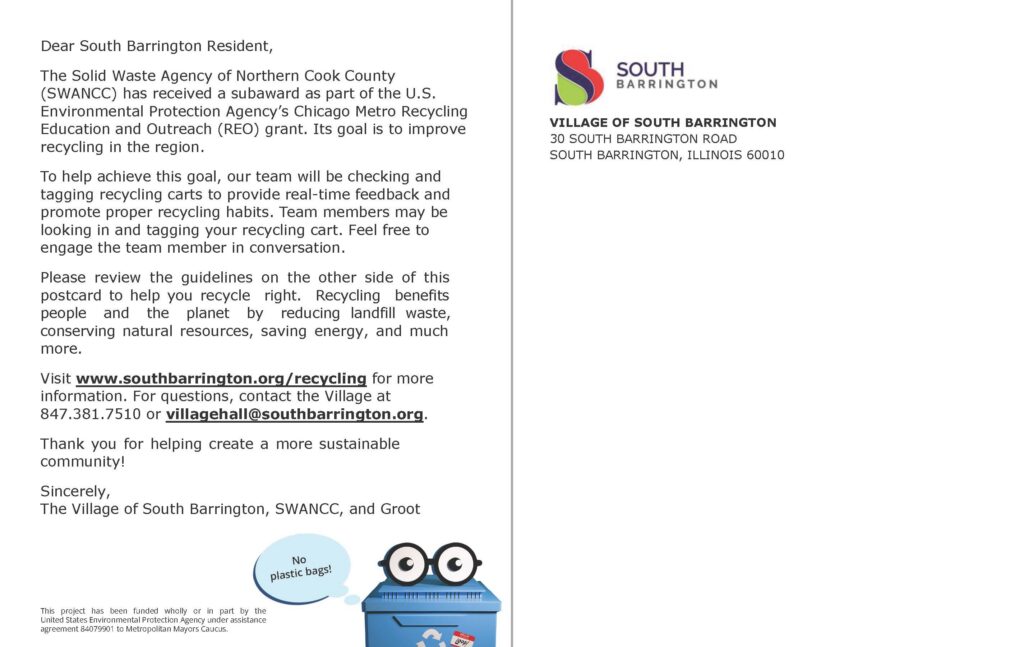
The Village, in collaboration with the Solid Waste Agency of Northern Cook County (SWANCC), will be conducting a 4-week recycling cart tagging and education program in select neighborhoods, funded by SWANCC and the U.S. Environmental Protection Agency’s Chicago Metro Recycling Education and Outreach Grant Program.
What is the purpose of cart tagging?
The goals of the program are to encourage proper recycling and reduce recycling contamination through direct feedback on the materials placed in your recycling cart.
Including unacceptable items in your recycling cart is dangerous and costly for our recycling haulers and processors. With immediate feedback on the quality of your material, you are better informed of what can – and can’t – be recycled in your cart. Staff will keep track of trends in recycling practices observed and use this data to create relevant educational materials for the community.
How does cart tagging work?
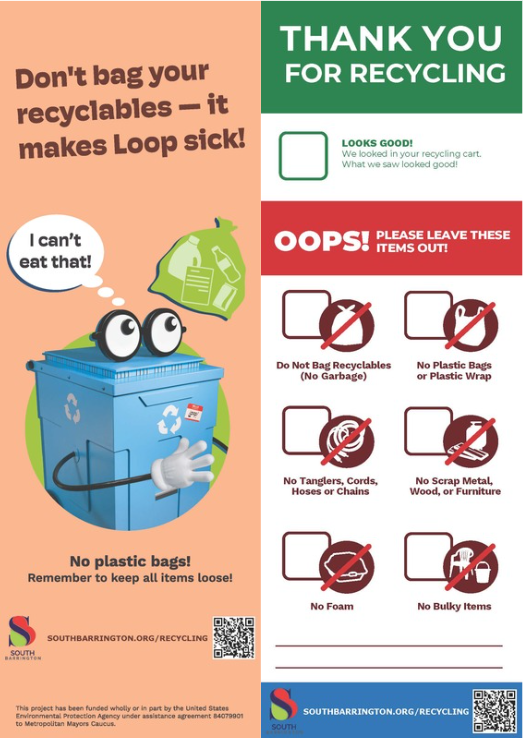
A staff team will walk along the street in the tagging area on garbage collection day each week during the tagging period to check recycling carts for contamination (items not accepted through curbside recycling). Staff will be easily identifiable with high-visibility vests.
Staff will open recycling carts and look inside but will not touch the contents. A paper tag will be attached to each cart and staff will mark “Thank You!” when all visible materials are good recyclables or “Oops!” to identify items that don’t belong in the recycling cart.
What happens if unacceptable items are put in the recycling cart?
When unacceptable items are put in the recycling cart, they contaminate good items and hurt the recycling process. Contamination in recycling carts:
- Increases cost to recycle – More contamination requires more processing after collection, and many contaminants (like plastic bags or batteries) can damage the recycling sorting equipment. These impacts mean the costs for recycling go up, and the cost increases get passed on to you, the resident.
- Sends MORE, not less, material to the landfill – Unacceptable items can ruin otherwise good, acceptable items and send both to the landfill. For example, food or liquids in the recycling cart can spread to paper and cardboard and make it unacceptable to markets.
Putting only acceptable materials in the cart sends more good items to markets to make new products and conserves our natural resources. Keep it simple and recycle:
- Cardboard and paper
- Plastic bottles, jugs, tubs, and jars
- Metal / aluminum food and beverage cans
- Glass bottles and jars
Will cart tagging affect garbage and recycling collection service?
No, garbage and recycling will be collected as normal. Tags are solely educational and will not impact collection.
Who do I contact with questions?
Contact Matt Dropka at 847-381-7510 with any questions about cart tagging and recycling correctly.
Program Materials